Card Not Present Fraud

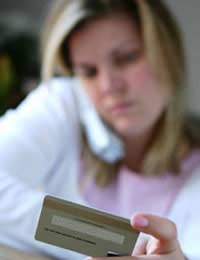
In these days of Internet and telephone shopping, we often buy goods on our credit cards without the merchant being able to see the card. That makes it a market open for fraud - in fact over £150 million in 2004
How It Works
You make a purchase by credit card in a shop, and perhaps you don't take your receipt, or just discard it in a bin, either on the street or at home. It's found by a "bin diver" and used for purchases online or over the phone. The first you know about it is when you receive your monthly statement.The main areas for 'card-not-present' crooks are high-value goods - expensive televisions, computers, etc. - that can be easily purchased and sold on by crooks.
They're helped by the fact that, according to statistics, one in three people don't shred their receipts when they have finished with them, while one in five people allow others to use their credit cards to make purchases.
How To Avoid The Fraud
- Don't let anyone else use your credit card.
- Always take your receipt.
- Keep your receipts, and tear them up, or preferably shred them, before disposing of them.
- Only shop from well-known web sites which display a secure padlock logo, and have both a landline phone number and a real address (not a P.O. Box).
- Don't give out your PIN numbers.
- Keep your credit cards and cheque book safe.
What To Do If You're A Victim
For Businesses
Obviously, businesses are affected by this fraud too. The best ways they can protect themselves are:- Implement a AVS/CVC checking system.
- Use an address verification service.
- Register Verified by Visa and MasterCard Secure Code.
- Avoid orders overseas where possible.
- Use the APACS CNP Guide.
- Where possible, validate telephone numbers through Directory Enquiries and call the customer back to confirm the order.
- Exercise caution with people only willing to provide mobile telephone numbers for contact.
- Consider implementing a transaction "ceiling limit".
Related Articles in the 'Credit Card Scams' Category...

Re: Bank Identification or BIN numbers Scam
The information you have given above is very reassuring, I had 2 calls the first with a withheld number, wher the…
Re: Builder's Scams
I used a builder accredited by the federation of master builders and trustmark. I have now lived for 18 months in a house with no kitchen, an…
Re: Scams And Seniors
Scammed out of £12500 by a builder who has been to court several times. I paid by my debit card, have I any chance of getting compensation. I am…
Re: Vishing Scam
Had a text message this morning form a mobile number saying that I’ve missed a delivery and that I needed to pay 1.50 to R.M. Lucky enough my iPhone…
Re: Vishing Scam
I received an email from Royal Mail regarding a missed letter from HM customs there was a link to reschedule and I clicked on it and it was a form but…
Re: Sky TV Scam
Just a had call from someone for thay for sky calling my my broadband but sky aways asked you got Security question first
Re: Sky TV Scam
Just had a call from a very unsure SE Asian sounding woman who sounded as though she was in an exceptionally busy call centre- very difficult to make…
Re: Sky TV Scam
I’ve just had a phone call from a man claiming to be from sky telling me that he needs me to log into my computer so that he can help me set up my new…
Re: Sky TV Scam
Just had phone call saying my sky broadband wasn't working correctly and could I go to my computer and log into sky There is nothing wrong with my…
Re: Sky TV Scam
I just had phone call but it was from my own number saying they were sending me new box as mine was out of date. The address they had I moved from ten…