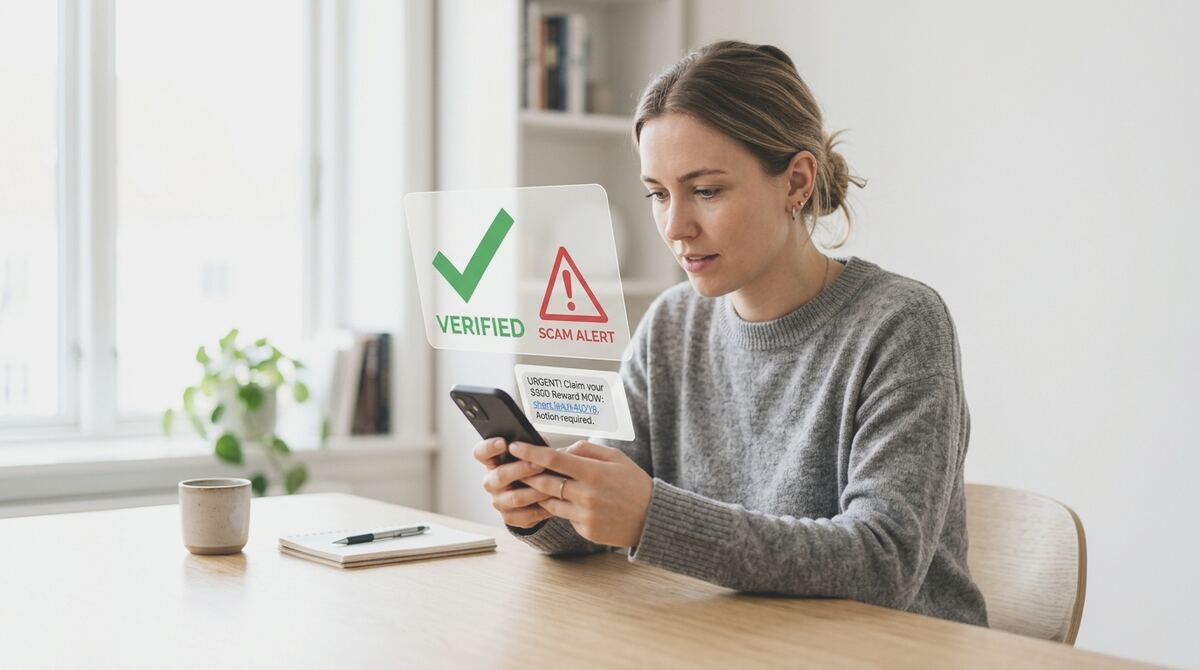
What the Scam Detector is for
If something has landed in your inbox, come through on a text, popped up on social media, or arrived as a phone call, and your gut is telling you to be careful, this tool gives you a quick second opinion. You describe what happened in your own words, and it tells you how likely it is to be a scam and what to do next.
It is meant to help in the moment, before you click a link, transfer money, or share any personal details.
When it is worth using
Use it if you have had a message that feels off, an offer that seems too generous, a caller claiming to be from your bank, HMRC, the police, a delivery firm or a utility provider, or a stranger online who has become very friendly very quickly. It is also useful if an older relative has been contacted and you want to sense-check the situation for them.
You do not need to be sure something is dodgy to use it. If you are uncertain, that is exactly when it helps. It is equally fine for people who have already parted with money or details and want to know what to do now, including how to report it and whether you can get money back.
How it works
You answer a short series of questions about the contact you have had, such as who it claimed to be from, how they reached you, what they were asking for, and anything that felt wrong. You then get a plain English summary covering how likely it is to be a scam, the specific type it resembles, the immediate steps to take, and who to report it to, including Action Fraud, your bank, or the relevant platform. You do not need to sign up, and the details you enter are not stored against your name.
Ask Safe from Scams a question
Ask our editorial team a question and we will reply with our advice. Tell us as much about your situation as you can: the more detail you give, the more useful our answer can be.
You do not need to use your real name. Please do not include your full address, phone number, email address, or the names of other people. We may edit or remove identifying details for privacy and legal reasons.
Comments are moderated before publication.